
The most coordinated robotics strategy Germany has ever launched. But the window is 12 months.
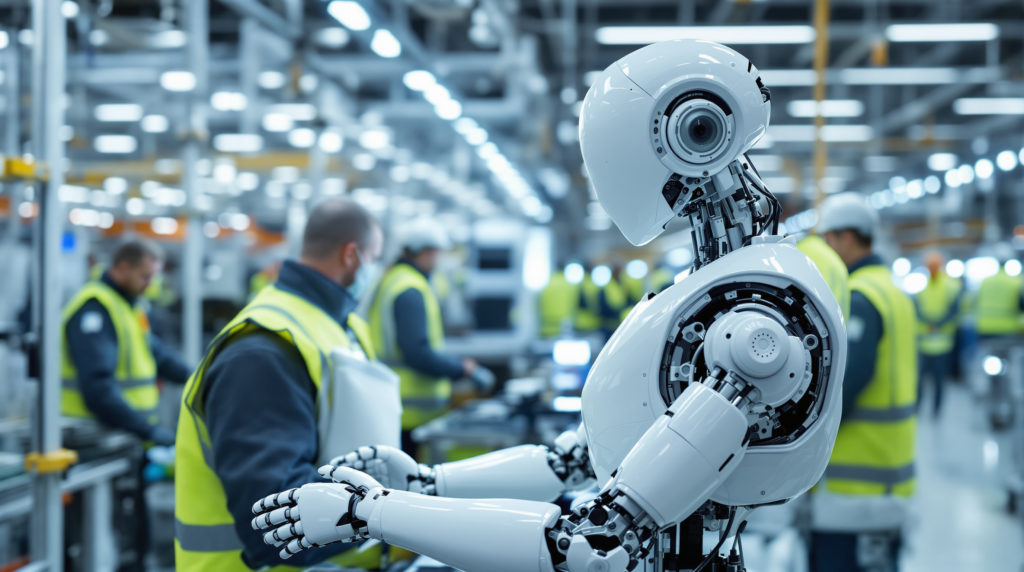
On January 14, 2026, Bosch founded Robert Bosch Robotics GmbH and announced a strategic partnership with Neura Robotics. A day earlier, Neura unveiled production-ready humanoids at CES 2026 with a €1 billion order backlog. Schaeffler presented planetary gear actuators and plans several thousand humanoid deployments by 2035. Siemens provides the digital twin infrastructure and Industrial Foundation Model.
This isn’t just another partnership. This is Germany’s coordinated answer to Boston Dynamics (US), Figure AI (US), and China’s scale offensive.
The question: Is it fast enough?
Bosch-Neura: Training Data from 300 Factories
Bosch’s announcement was precise: Robert Bosch Robotics GmbH with ~70 employees, dedicated to humanoid robotics. The most innovative element addresses robotics’ fundamental bottleneck: training data.
Workers in Bosch’s 300 global factories will wear sensor suits to capture real-world work movements, environmental data, and production workflows. Neura CEO David Reger: “Physical training data is robotics’ greatest challenge. Nobody has this data. You can’t train swimming just by watching videos. Muscle memory must be trained in practice. Robots similarly cannot be trained only synthetically.”
This is the critical difference from pure simulation: real factory conditions, real variability, real edge cases no simulator can predict.
Joint software development: Bosch and Neura are co-developing AI-based foundation and functional software, integrated with Neuraverse—Neura’s fleet-learning platform where skills transfer instantly to all connected robots.
Industrialization support: Bosch assists Neura with scaling—manufacturing optimization, potential component supply, possible final assembly and motor production.
Peter Svejkovsky (Bosch): “We want to leverage humanoid robotics capabilities more fully. In cooperation with Neura, we’re advancing this future field.”
Neura Robotics: €1B Order Backlog, Shipping June 2026
CES 2026 was Neura’s coming-out as a production-ready manufacturer.
4NE1 Gen 3.5:
- Design: Studio F.A. Porsche (Porsche 911 designers)
- Price: €98,000
- Shipping: June 2026
- Specs: 1.8m height, 100kg payload, NVIDIA Thor T5000 processor
- Status: Direct order, production-ready
4NE1 Mini: €19,999, shipping April 2026 for research, education, light commercial use.
The €1 billion order backlog was confirmed across multiple sources. Reports suggest a final €1 billion Tether investment at €8-10 billion valuation.
Neuraverse as differentiator: When one robot learns a skill, knowledge propagates instantly across the entire fleet. Neura Gyms—dedicated training facilities—generate real-world data simulation alone cannot provide.
David Reger: “We want to build the operating system for all robots in the world. We’re the only ones with a platform where all robots connect to all intelligent devices through the same brain.”
Schaeffler: From Component Supplier to Robot Deployer
The Schaeffler-Neura partnership (November 2025, formalized CES 2026) focuses on two elements:
Precision components: Planetary gear actuators with 60-250 Nm torque, optimized for continuous industrial duty with back-drivability for safe human-robot interaction. Actuators constitute ~50% of humanoid components—Schaeffler’s manufacturing excellence solves an industry bottleneck.
Own deployments: Schaeffler plans a “mid-four-digit number”—several thousand—humanoids across its global production network by 2035. Initially: logistics, material handling. Later: assembly, packaging as dexterity improves.
Expectation: Humanoid robotics contributes up to 10% of group sales by 2035.
Siemens: The Infrastructure Layer for AI-Driven Manufacturing
Siemens positions itself not as a robot manufacturer but as the enabling layer—the infrastructure allowing AI-powered robots to be designed, tested, and reliably operated.
Industrial Foundation Model: Trained on 150 petabytes of verified engineering data (3D CAD models, process simulations, quality inspection datasets), developed with Microsoft on Azure. Unlike general-purpose LLMs prone to hallucination, this model speaks “the language of engineering and manufacturing” with industrial-grade reliability.
Erlangen Digital Factory blueprint: 69% productivity increase, 42% energy reduction, 100+ deployed AI use cases. This is the blueprint for fully AI-driven adaptive manufacturing, starting 2026.
Digital Twin Composer (mid-2026 launch): Photorealistic, physics-accurate factory models connected to real-time production data. PepsiCo pilot: 90% issues identified pre-deployment, 20% throughput increase.
The German Cluster: Coordinated, Not Fragmented
This is coordinated strategy:
- Neura: Cognitive AI, fleet learning, integration
- Bosch: Manufacturing scale, training data (300 factories)
- Schaeffler: Precision components, internal deployments
- Siemens: Digital twin infrastructure, Industrial Foundation Model
Plus BMW, Mercedes-Benz, Porsche, Volkswagen are members of “Made for Germany” (launched July 2025)—an initiative with 100+ major industrial players.
Germany isn’t betting on individual champions but an integrated ecosystem.
David Reger: “Neura wants to bring Europe into a global leadership role in humanoid robotics. We want to set the global standard for Physical AI—creating a European counterweight to platform giants from the US and China.”
The Benchmark: Boston Dynamics, Figure AI, China Scale
Boston Dynamics Atlas: Production-ready electric Atlas shipping 2026, Google DeepMind Gemini Robotics AI integration, committed to Hyundai Georgia Metaplant, 56 degrees of freedom, 50kg lift.
Figure AI: 11-month deployment at BMW Spartanburg, Figure 02 contributed to 30,000 cars (sheet-metal loading), $1B raise at $39B valuation.
China: 21 of 38 humanoid exhibitors at CES 2026 were Chinese (55%). Agibot: 5,000+ units shipped, 1,000+ deployed in Chinese automotive parts factories. Unitree R1: $5,900 entry price.
Germany must compete against established US players with DeepMind integration and China’s scale offensive.
The Critical Question: When Does BMW Test Neura Instead of Figure?
BMW tested Figure 02. Eleven months. 30,000 cars produced. US company.
When does BMW test Neura? Or Schaeffler’s own humanoids? Or Bosch internally?
This question determines whether “Made in Germany” Physical AI matters.
If German companies choose US/China platforms for next pilots: game over for the German cluster.
If Schaeffler, Bosch, Siemens deploy their own robots internally and show success: proof it works.
EU regulation (workplace safety, CE marking, worker protection) could become an advantage—not fast despite compliance, but fast because of safe, human-centric design.
But only with rapid successful deployments.
Training Data Challenge: Sensor Suits vs. Digital Twins
Bosch’s sensor-suit approach is innovative. 300 factories. Real-world conditions. Edge cases.
But is it enough?
Physical AI training has three approaches:
- Synthetic data (NVIDIA: 780,000 trajectories in 11 hours = 9 months human demos)
- Real-world capture (Physical Intelligence: 10,000+ hours weekly)
- Sensor suits in production (Bosch: new)
My hope: combination. Sensor suits for real-world edge cases. Digital twins (Siemens Erlangen) for scalable simulation.
This could be the game-changer: real data captured in Bosch factories → fed into Siemens digital twins → scaled via Neuraverse fleet learning.
But that’s theory. Proof comes in 2026/2027.
My Timeline Assessment
Hope: Major pilots in 2026. Schaeffler, Bosch internally. Perhaps a German OEM.
Expectation: First scaled production deployments (not pilots—true production scale) earliest mid-2027.
Reality check: Goldman Sachs projects a $38B market by 2035. IFR declared humanoids a major 2026 trend. But MIT’s Rodney Brooks warns: “Deployment at scale takes so much longer than anyone ever imagines.”
Current deployments (Atlas at Hyundai, Digit at Amazon/GXO, Figure at BMW): structured tasks, controlled environments. Not general-purpose autonomy.
The 12-Month Window
2026 decides.
Either: ✓ German companies deploy German robots for next pilots ✓ Schaeffler, Bosch, Siemens show internal success ✓ Training data combination (sensor suits + digital twins) works ✓ “Made in Germany” becomes competitive advantage through safety/compliance
Or: ❌ German companies choose US/China platforms again ❌ Cluster remains fragmented without successful deployments ❌ Germany loses Physical AI like it lost digital AI
We know this pattern: Digital AI dominated by US (OpenAI, Anthropic, Google). Cloud dominated by US (AWS, Azure, Google Cloud). Mobile OS dominated by US (iOS, Android).
Physical AI is the last chance for European platform ownership.
Twelve months.